

 Loading...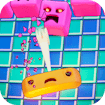










Face Breaker is a brick-breaking arcade game where the paddle controls both survival and the direction of every return. The ball speeds across the playfield, striking illustrated blocks before falling back toward the bottom. Your objective is to clear the layout while keeping the ball in play and choosing angles that reach the remaining targets.
How to Play Face Breaker
Move the paddle beneath the ball and make contact before it crosses the bottom edge. Hitting the centre of the paddle produces a predictable return, while contact near either edge sends the ball along a sharper angle. Beginners should favour central returns until they understand the speed, then use the paddle edges to attack blocks that are difficult to reach.
Watch the ball immediately after every impact. Its next path is easier to predict near the top of the screen, giving you time to move into position. Avoid following the ball with constant small movements; identify the landing area and travel there early.
Control Paddle Angles
Angle control separates a safe rally from a useful rally. A straight return keeps the ball alive, but it may repeat the same path through an empty section. If most blocks remain on the left, meet the ball slightly left or right of the paddle centre so the rebound travels toward that side.
Sharp angles can reach behind block formations, but they also create faster horizontal movement. Use them when the lower area is open and you have time to recover. When the ball is already moving quickly, choose a central contact and stabilise the rally before attempting another precise shot.
Face Breaker Tips for Longer Rallies
- Move early: predict the landing zone instead of chasing the ball at the last moment.
- Use the paddle centre for safety: central contact gives a more readable rebound.
- Aim at uncleared areas: change the return angle when the ball keeps travelling through empty space.
- Follow every deflection: contact with several blocks can alter the path quickly.
- Protect lives first: a safe return is better than missing while attempting a perfect angle.
Clear the Final Blocks
The last few targets are often harder than the crowded opening because the ball can pass through large empty gaps. Stop relying on random rebounds. Note which side contains the remaining block, position the paddle early, and use an edge contact to redirect the ball toward it.
If the ball approaches at an awkward angle, keep it alive with a central return and wait for a better opportunity. One controlled setup shot can make the next attack far easier. Patience matters more as the board becomes empty.
Improve Your Score
Consistency in Face Breaker comes from reading two events ahead: where the ball will meet the paddle and where the chosen return will travel. Practise central contacts first, then alternate between centre and edge hits. This teaches you how much directional change each paddle position creates.
Keep your attention on the ball rather than the visual effects from breaking blocks. When several blocks disappear together, the new path may be partially hidden for a moment. Continue moving toward the predicted landing zone and correct only after the ball becomes clear again.
Face Breaker FAQ
Why does the ball keep returning to an empty area?
You are probably contacting the same part of the paddle each time. Shift the paddle so the next hit changes the rebound angle.
Are edge hits always better?
No. They create stronger angles but reduce predictability. Use the centre when survival is the priority and the edges when you have a clear target.
What should I watch during a rally?
Track the ball’s direction after every block and move toward its likely landing point before it reaches the lower half.
For another challenge built around predicting rebounds, play Boing Bang. Face Breaker focuses more closely on paddle placement and deliberate return angles.